Sid Mehta
Bodhi on Vision Pro

Bodhi on Vision Pro

Thesis · visionOS
Project details

Year

2025-2026

Client

Self Initiated · MFA Thesis, Parsons D+T

Timeline

5 months

Team

Solo

Tools

visionOS · SwiftUI · RealityKit · ARKit · ElevenLabs

Overview

Designed and built a Vision Pro thesis experience where a spatial AI tree uses gaze, voice, and deliberate pacing to make attention the interface.

Project highlights

5 months

research, design & build

Solo

designer · developer · researcher

visionOS

spatial AI experience

Bloom: who are you, to you

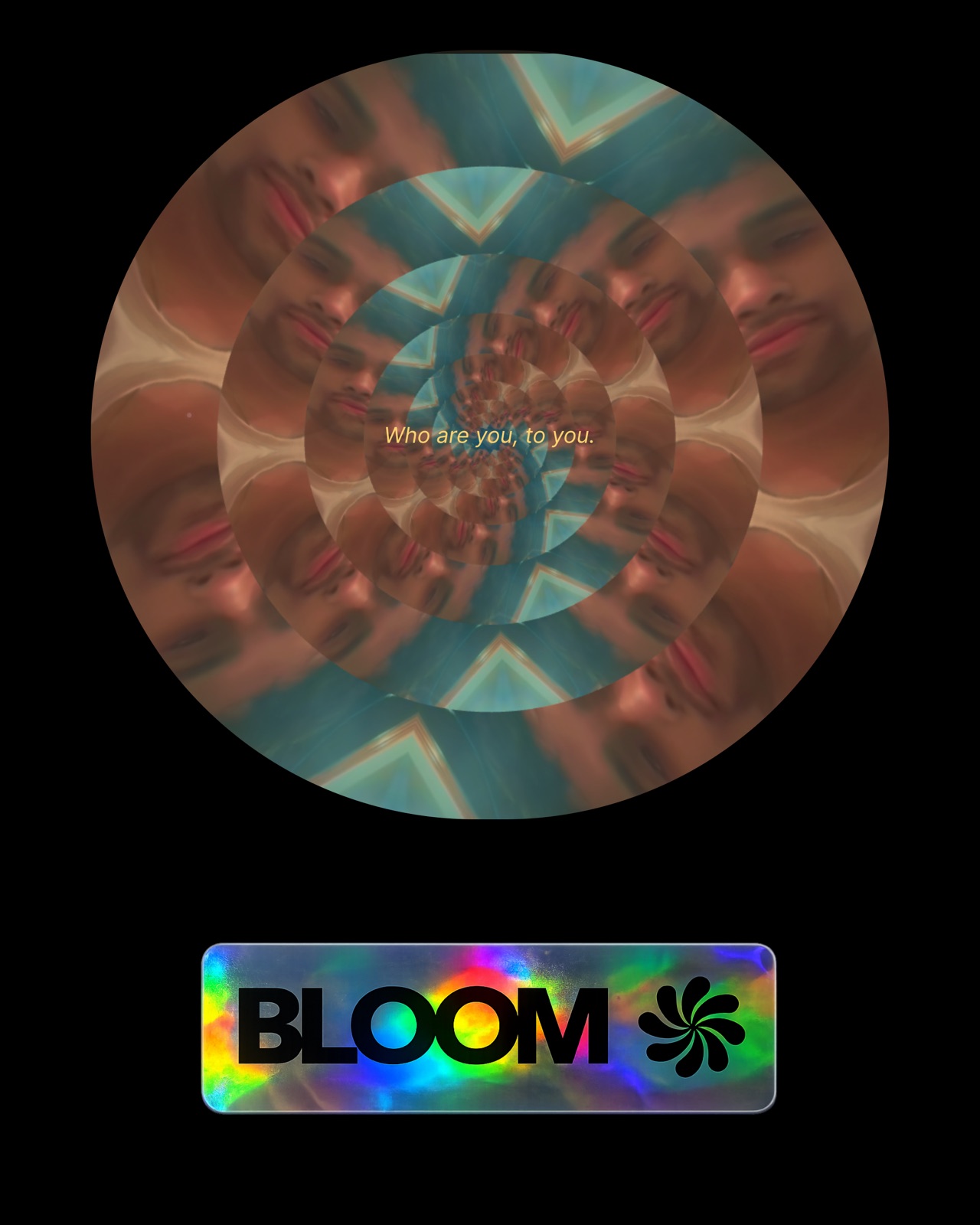
Who are you, to you?

Bloom turns that question into a Vision Pro room: an AI inhabited bodhi tree, a slow voice, and a drawing space where the visitor answers in 3D instead of typing into a box.

The first encounter is not a menu. A bodhi tree appears in the room, breathes, and begins a patient conversation.

Inside Vision Pro, the project is about presence: the tree, the voice, the room, and the marks you leave in space.

The tree settles into Bloom when the visitor stays with it long enough.

The tree, alive in the browser. An AI sits inside it. Talk to it.

The tree responds to where you look, not where you tap. Gaze at a branch and it stills. Look away and it drifts again.

Every question it asks has no right answer. It does not evaluate what you say. It just continues, with infinite patience.

The answer is not only spoken. Visitors can assemble and draw objects in 3D space, turning thought into a small spatial ritual.

A few earlier scene studies stayed in the archive, but the story now points back to the conversational spatial experience.

Calm should not be a claim. So an EEG headband read each visitor before the tree, and again after, to see what actually changed.

Four channels, read live. The meditation score rising and drowsiness falling as attention settled on the tree.

BrainBit Studio: EEG brain log from a Bloom session

The exhibition objects remain as proof of the thesis environment, but they now support the main interaction instead of taking over the scroll.

Bloom exhibition: physical bodhi altar with holographic sheet and lotus
Bloom exhibition: acrylic plate, No. 09 bloom

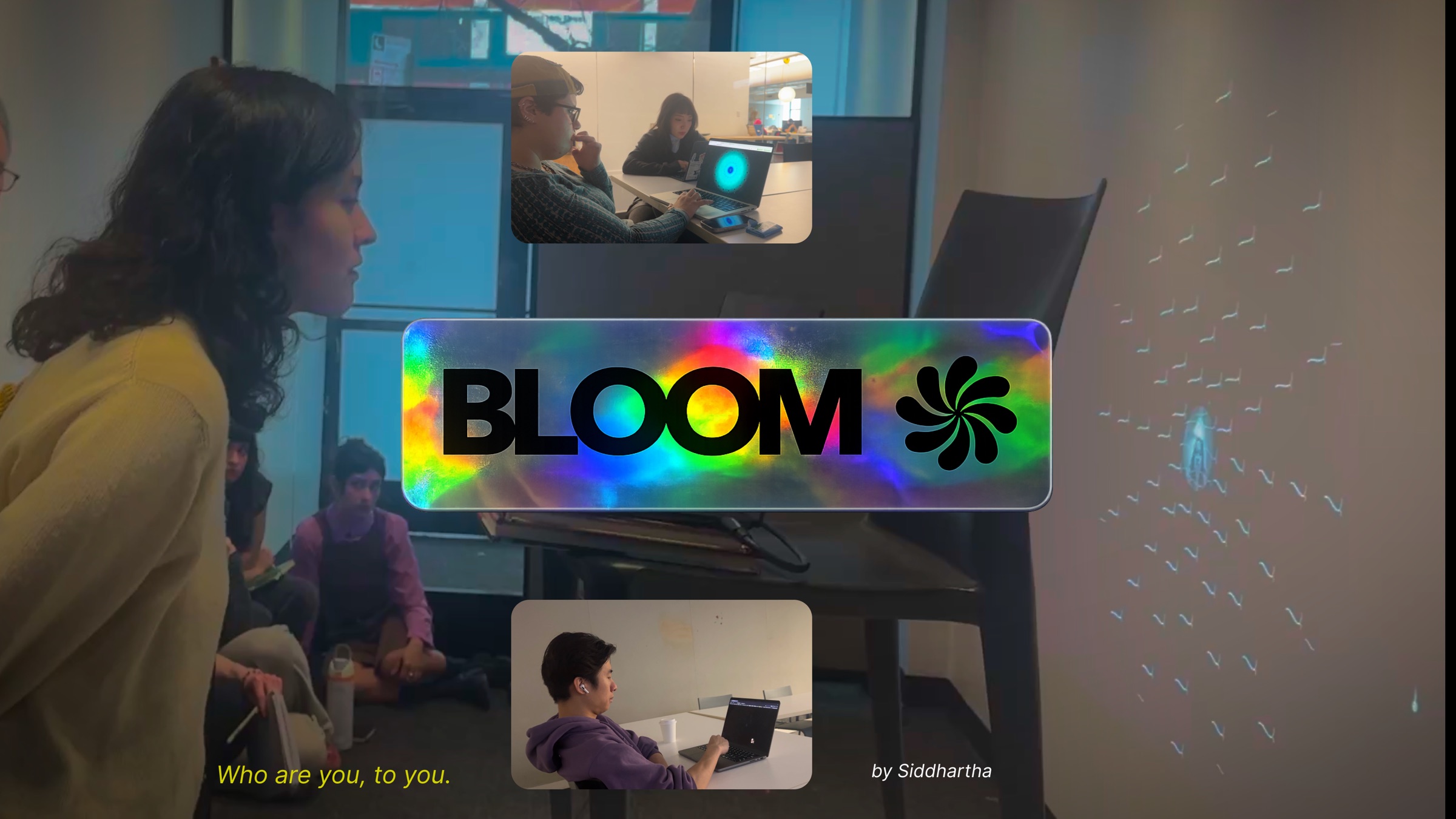
People sitting with it. The screen mirrored what the headset saw, so the room could watch too.

Design decisions

The calls that shaped this project: what I chose, why, and what each choice cost.

  1. Made attention the only input and removed the controls

    Every spatial demo answers the question of what you can do here. The thesis question was whether presence alone could hold someone, so there is no menu, no pinch-to-open, no settings panel anywhere in the room. Gaze and voice are the entire surface, and the tree responds to being looked at rather than to being operated.

    TradeoffThere is no way to recover from a misunderstanding. When the voice mishears, the user has no control to reach for and no obvious way to steer, and more than one tester sat through a stretch they had no idea how to leave.

  2. Slowed the voice past the point that felt comfortable

    Conversational AI defaults to fast turn-taking because latency reads as failure. Here the pauses were the content. Response timing was stretched deliberately and the silence after a question was held rather than filled, so the system reads as patient instead of as waiting for input.

    TradeoffThe first ninety seconds feel broken. Several testers assumed the app had hung before they understood that the pacing was the point, and I never found an onboarding line that fixes this without spoiling it.

  3. Placed the tree at conversational distance instead of filling the room

    The instinct on Vision Pro is scale, because scale is what the device does that a screen cannot. But a tree at room scale turns the person wearing the headset into an audience. At roughly two metres, sized to be looked at rather than looked up at, the relationship becomes a conversation.

    TradeoffIt gives up the spectacle that makes spatial work legible to anyone who has not worn the headset, and in a small room the placement occasionally lands inside furniture.

What I’d do next

The pacing works and I would not change it, but the recovery problem is unresolved: an interface with no controls still needs a way to say it has lost you without breaking the fiction. That is what I would build next. I would also want to test beyond a single session. Everything I learned came from first encounters, and the claim the thesis actually makes is about sustained attention, which a fifteen-minute demo can neither prove nor disprove.

Building for Vision Pro meant learning a new spatial design language from scratch. There are no flat screens to fall back on. Every UI decision is a room decision. Where the tree sits, how large it reads at arm’s length, whether the voice feels near or distant. All of it had to be felt in space, not sketched on a canvas.

What surprised me was how much the voice carried the experience. The visuals set the stage, but the moment the tree spoke, everything changed. The right pacing made it feel alive. The wrong pacing made it feel like a demo. That line was narrower than I expected, and finding it took more iteration than any technical problem.
Next Project

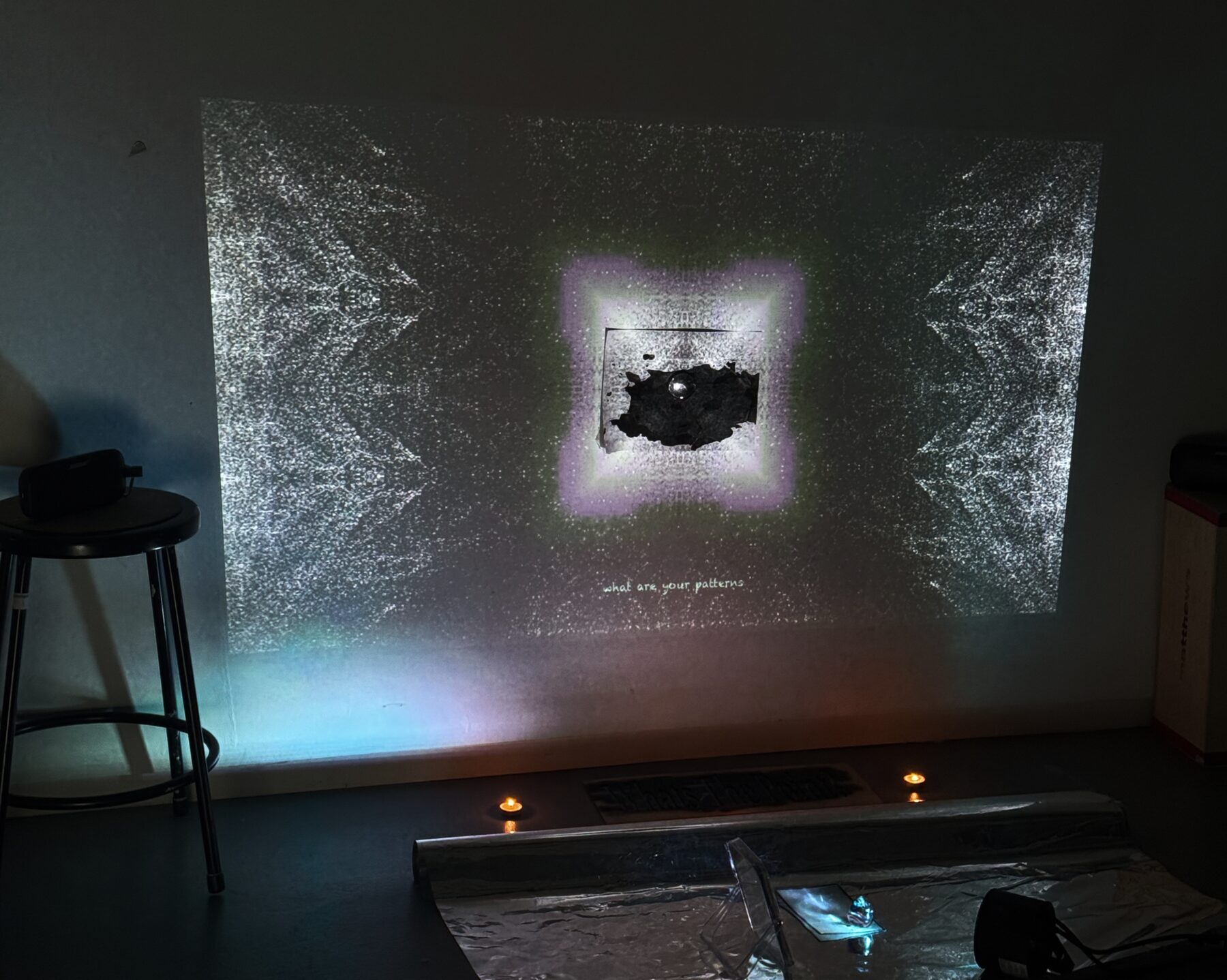
Bloom; who are you

Installation · TouchDesigner 2025

The installation the thesis grew from.

Get to know Sid off the clock
Last filmRequiem for a Dream
RoommatesTwo cats, zero deadlines
Last bookThe Godfather · Mario Puzo
On repeatSky I · Bby Eco
Last thing I designedMool · money, made legible
Last late nightA balcony, somewhere east
Comfort readBONE · Jeff Smith
40.71° N−74.01° WLast place I landed
Last place I landedNew York, NY
Made for funBloom · TouchDesigner
Last photo I tookFrom the camera roll
Last rabbit holeSpatial UI on Vision Pro
CurrentlyBuilding this site by hand
Last filmRequiem for a Dream
RoommatesTwo cats, zero deadlines
Last bookThe Godfather · Mario Puzo
On repeatSky I · Bby Eco
Last thing I designedMool · money, made legible
Last late nightA balcony, somewhere east
Comfort readBONE · Jeff Smith
40.71° N−74.01° WLast place I landed
Last place I landedNew York, NY
Made for funBloom · TouchDesigner
Last photo I tookFrom the camera roll
Last rabbit holeSpatial UI on Vision Pro
CurrentlyBuilding this site by hand