Bloom; who are you
Thesis · OngoingProject details
A self-initiated thesis installation where visitors meet generative mandalas, responsive sound, and a single question: who are you?
Project highlights
One question
who are you?
Solo
installation design & build
TouchDesigner
generative visual system
Design decisions
The calls that shaped this project: what I chose, why, and what each choice cost.
-
Asked one question and refused to add a second
Installations drift toward becoming systems with several modes. Holding to a single prompt meant the generative visuals had nothing to explain and the visitor had nothing to complete. The room only had to support one thought, and everything that did not serve that thought could be cut without an argument.
TradeoffIt gave the piece a low ceiling. Visitors who wanted somewhere further to go found the second minute much like the first, and there is nothing waiting to reward them for staying.
-
Tuned for a dark, near-empty room rather than for a gallery floor
In testing the piece worked in direct proportion to how still the space was. Rather than harden it against noise and crowds, I tuned the setup for the condition where it was strongest and staged the entry to slow people down before they arrived.
TradeoffIt does not survive a busy opening. In the conditions where most people actually encounter work like this, the piece is at its weakest. That is a real limitation, not a preference.
-
Used body tracking as a slow influence rather than as direct control
MediaPipe makes one-to-one mapping easy, and one-to-one mapping turns an installation into a mirror: people start testing what the system does instead of being in the room with it. The tracking feeds the mandala's growth over seconds rather than frames, so movement is felt but cannot be performed.
TradeoffThe connection is deniable. Some visitors never registered that the piece was responding to them at all and read the visuals as a video, which means the responsiveness did no work for them.
The world I was asking people to step away from. Loud, lit, everything at once.
The guided sit begins.
Spiral concept of evolution interested me.
I wanted to combine the spiral shape with the stories of shared human experience.
Introspective spaces
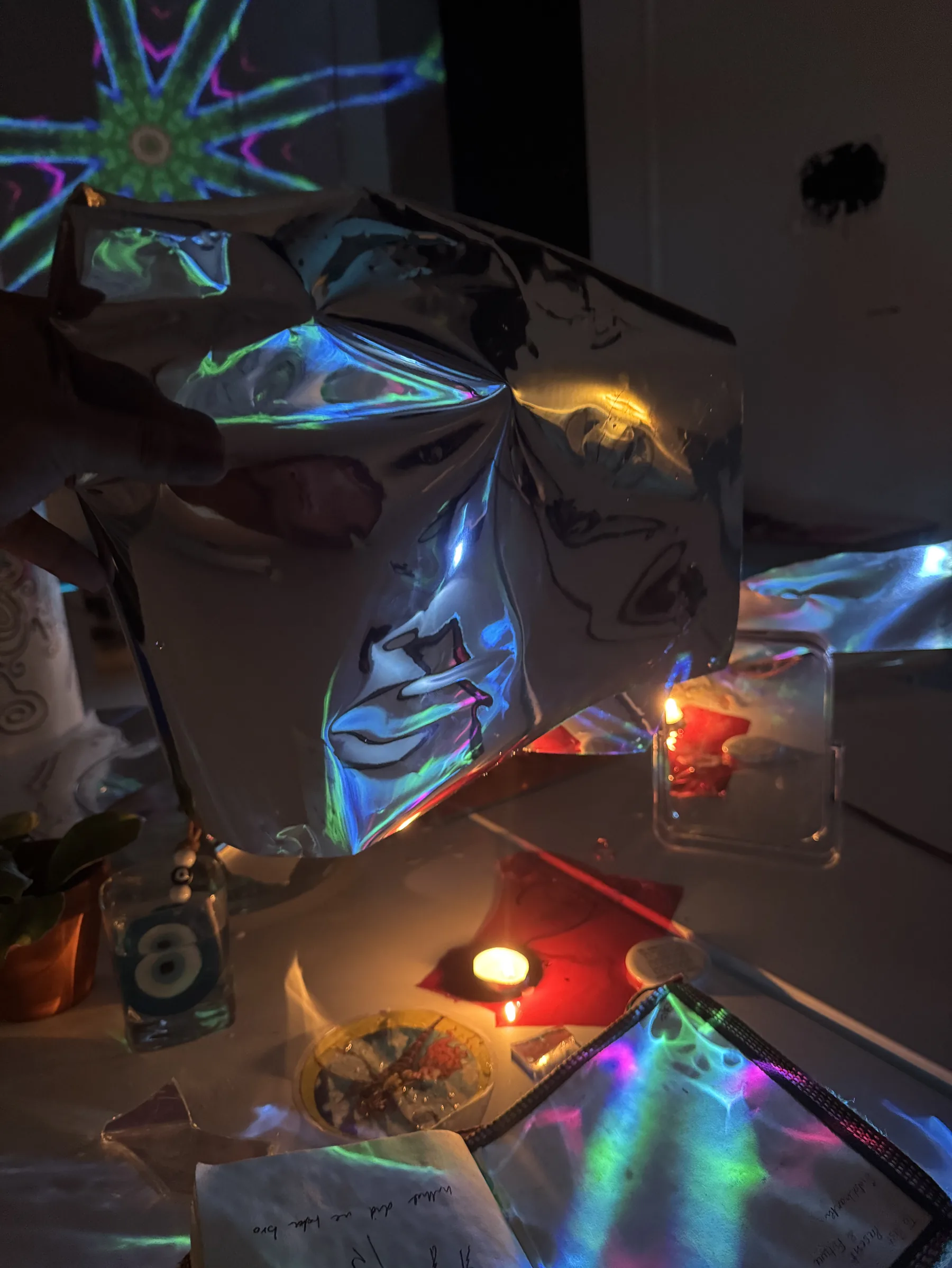
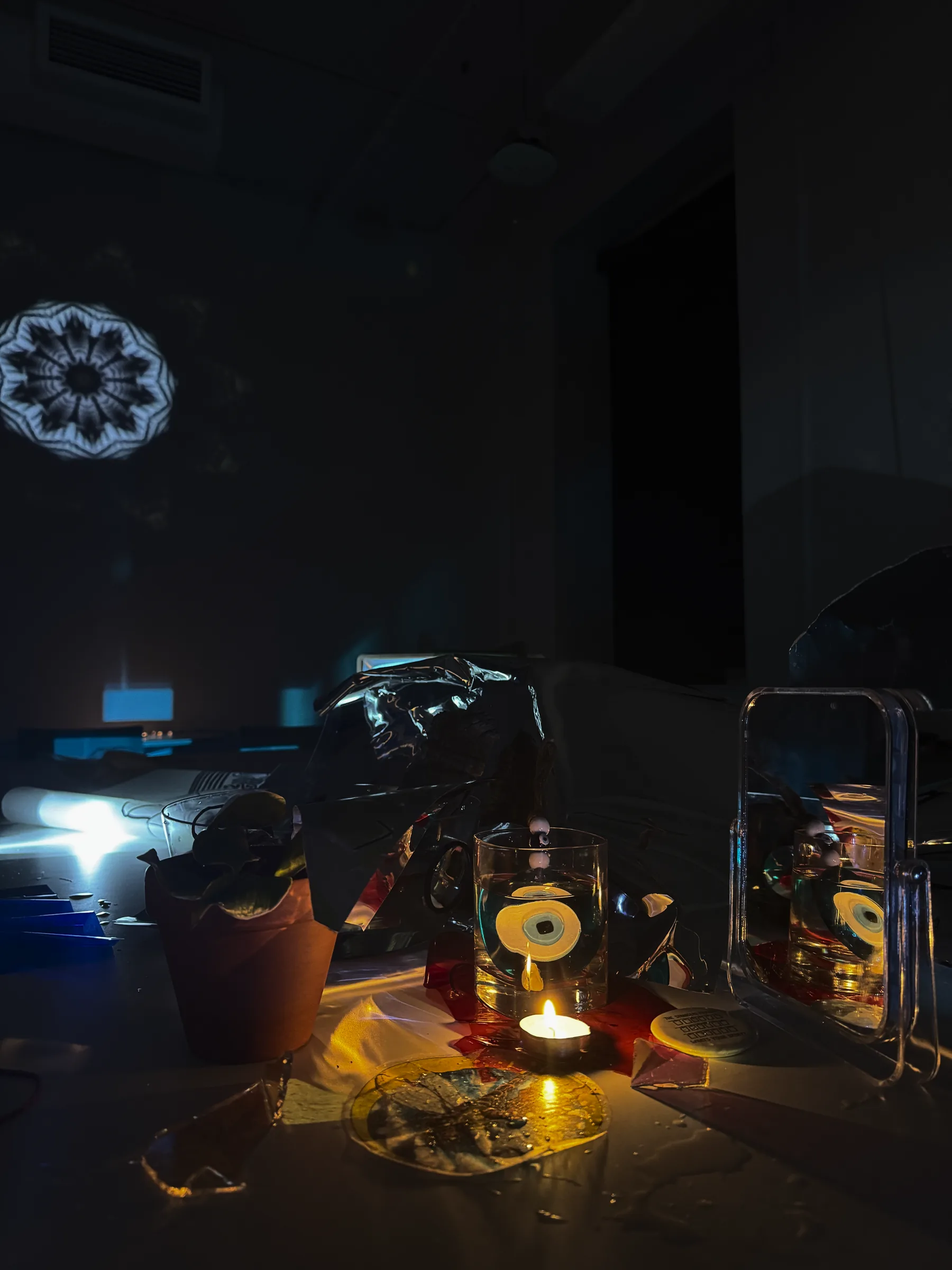
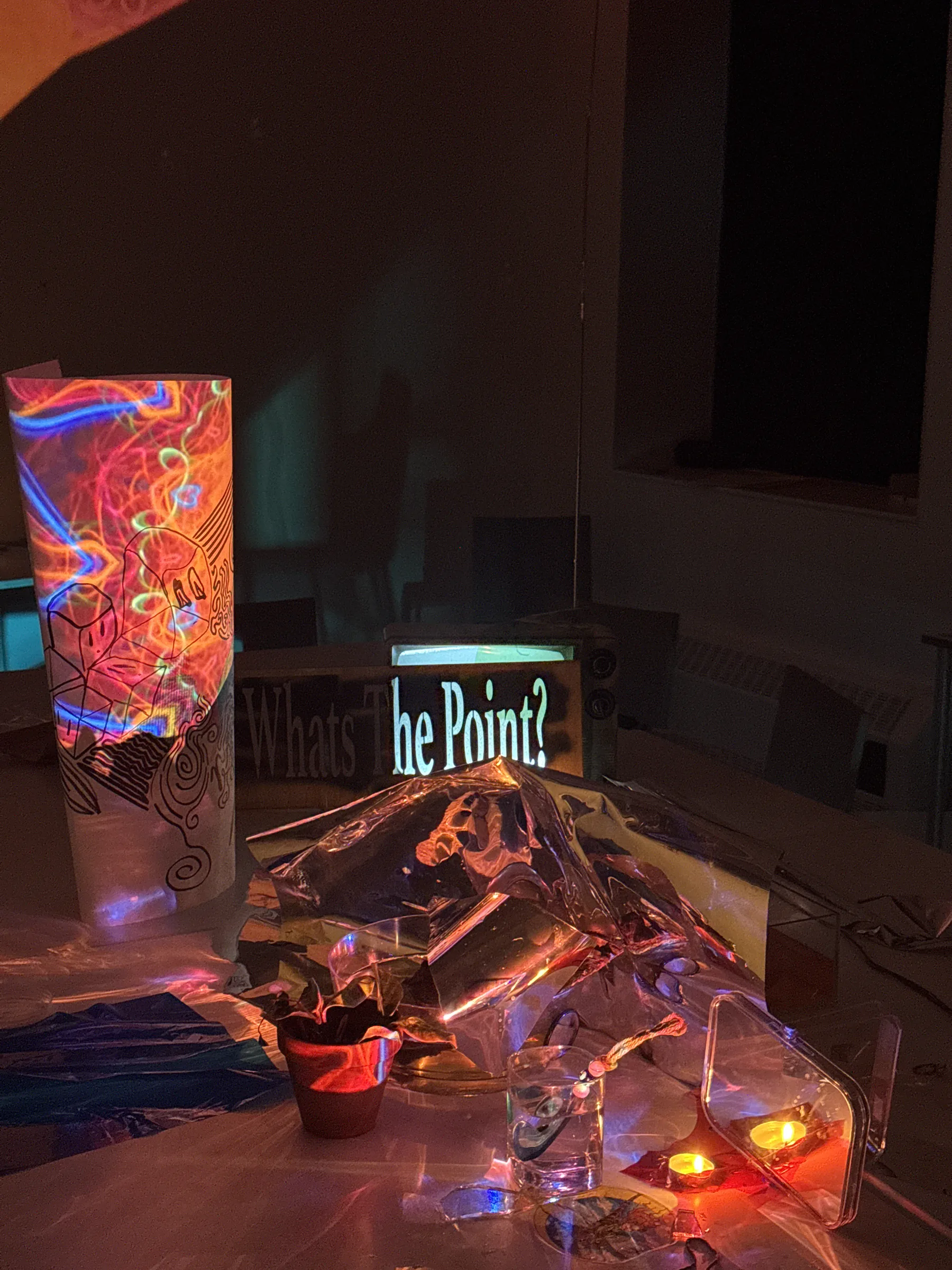
The lit room. Brighter, more reflective. People found it harder to settle.
Breathe
An earlier experiment. A 2D pixel art game asking if play could make you more still.
Bloom

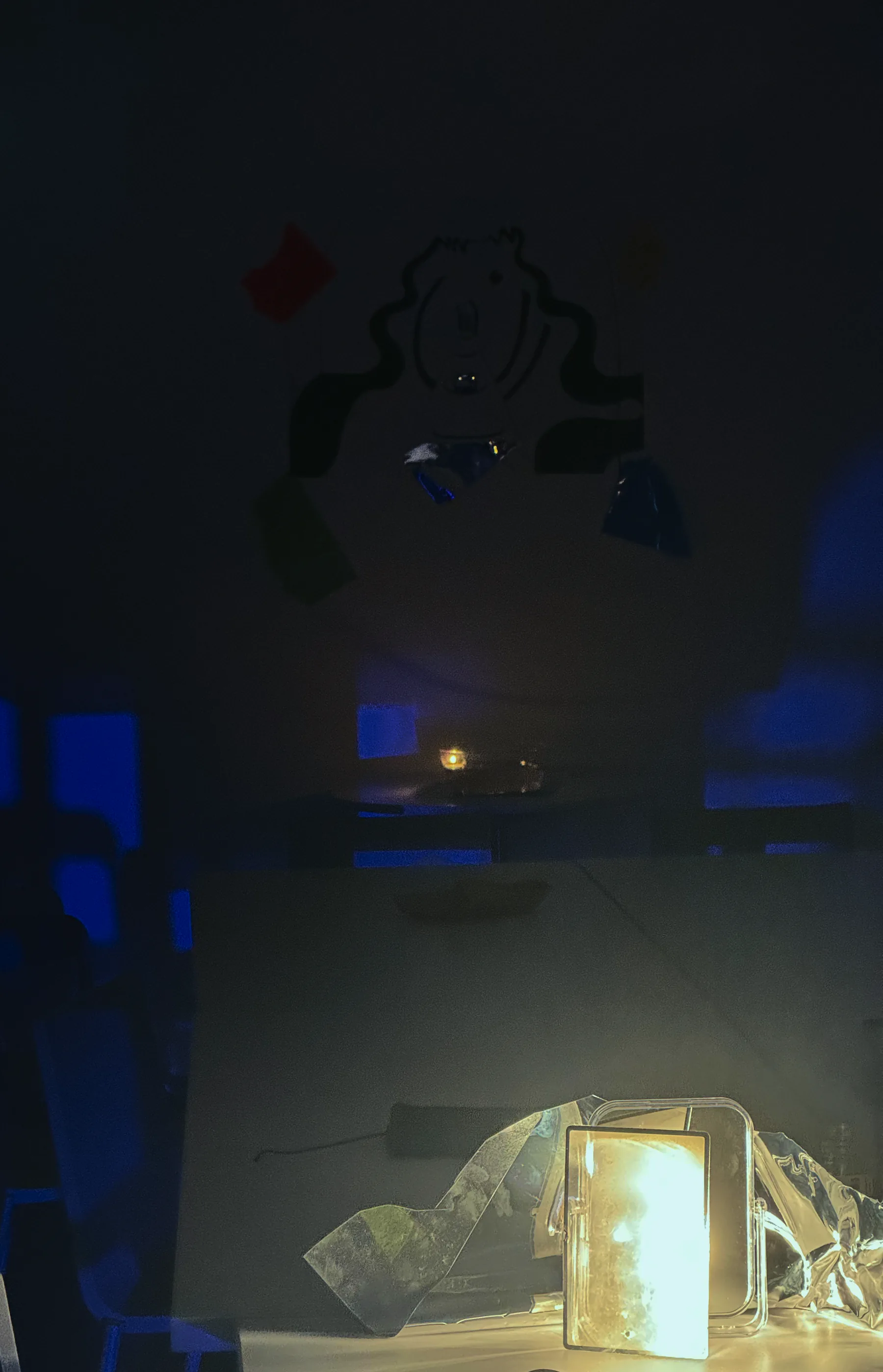
Experimenting with translucent acrylic shades and reflections.

Mandalas
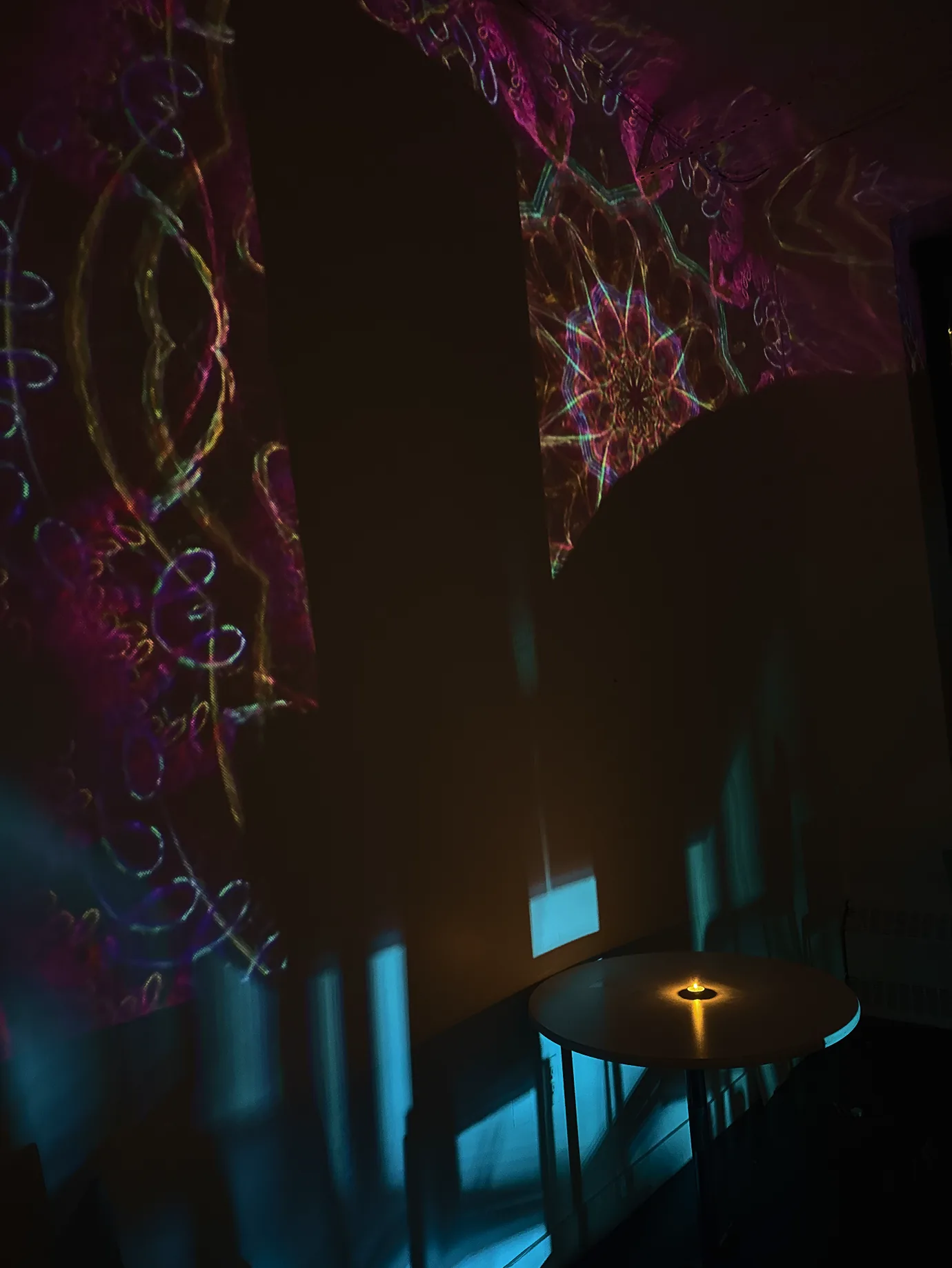
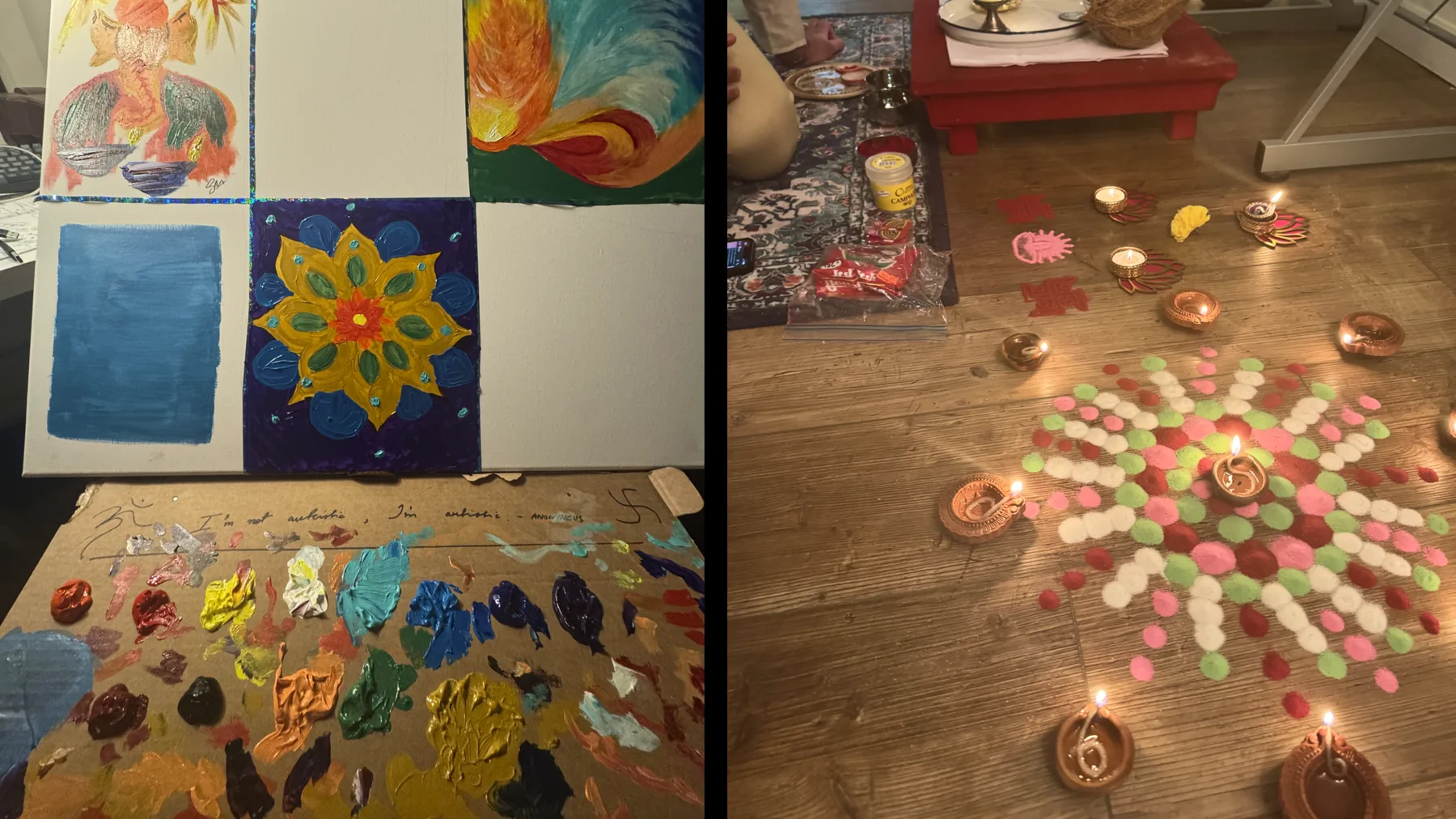
Mandalas made on festival floors, then walked over and dissolved. This started from that memory.
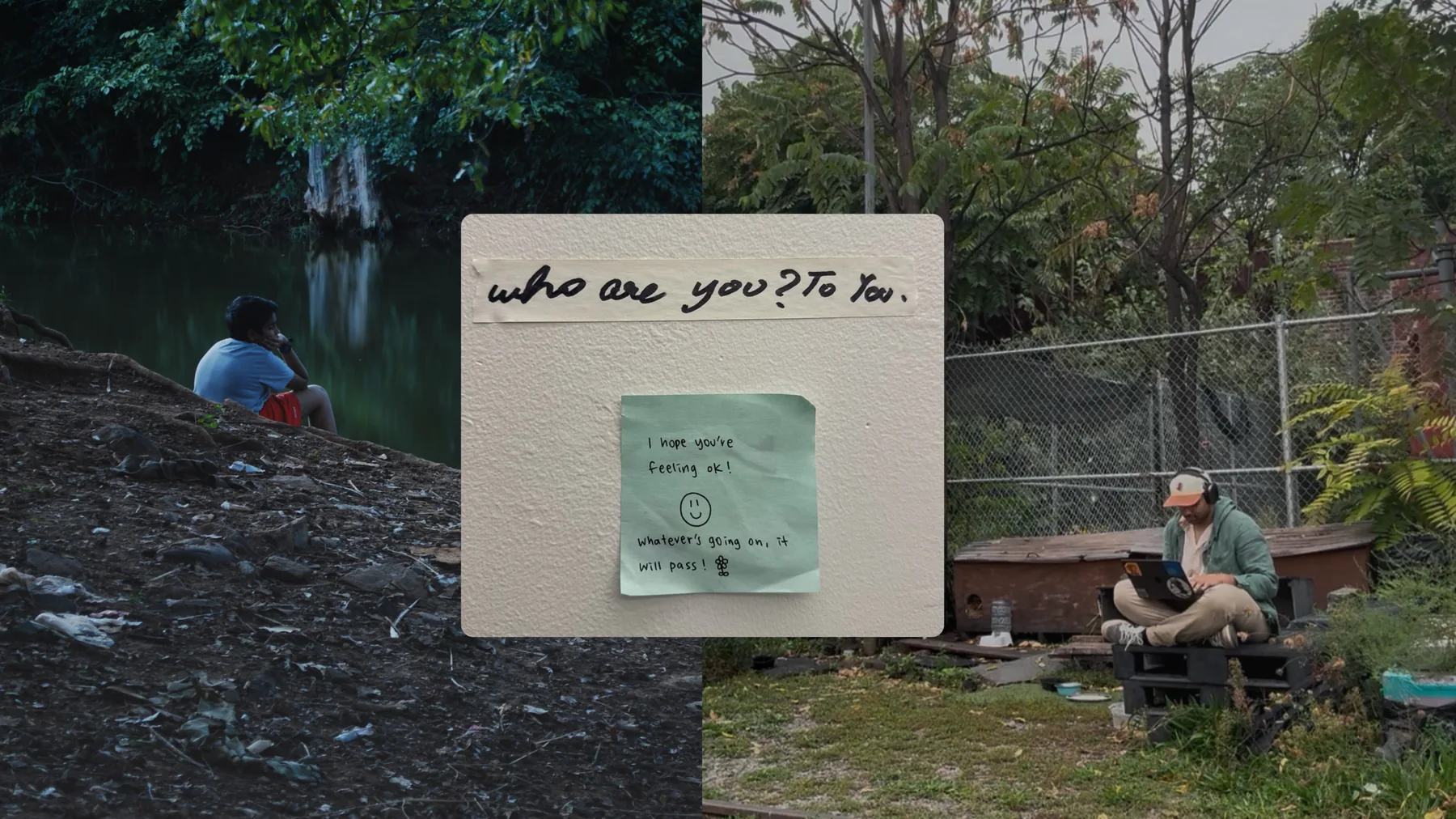
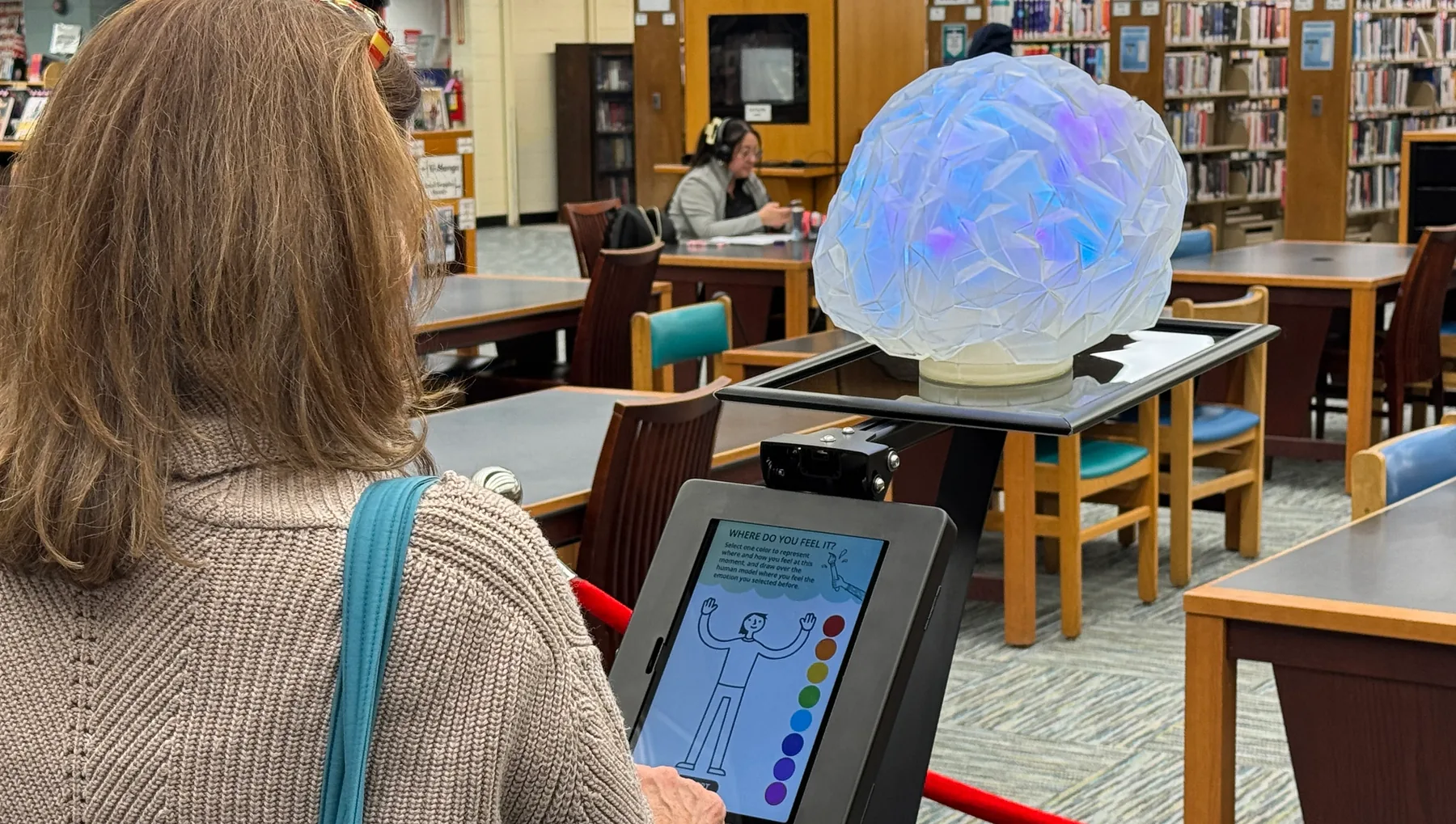
Sid's record. A brain scan, a name in binary, a voice. Inspired by the Voyager golden record.
Guided meditation
Most people needed a prompt to begin. Without direction, reflection stayed on the surface.
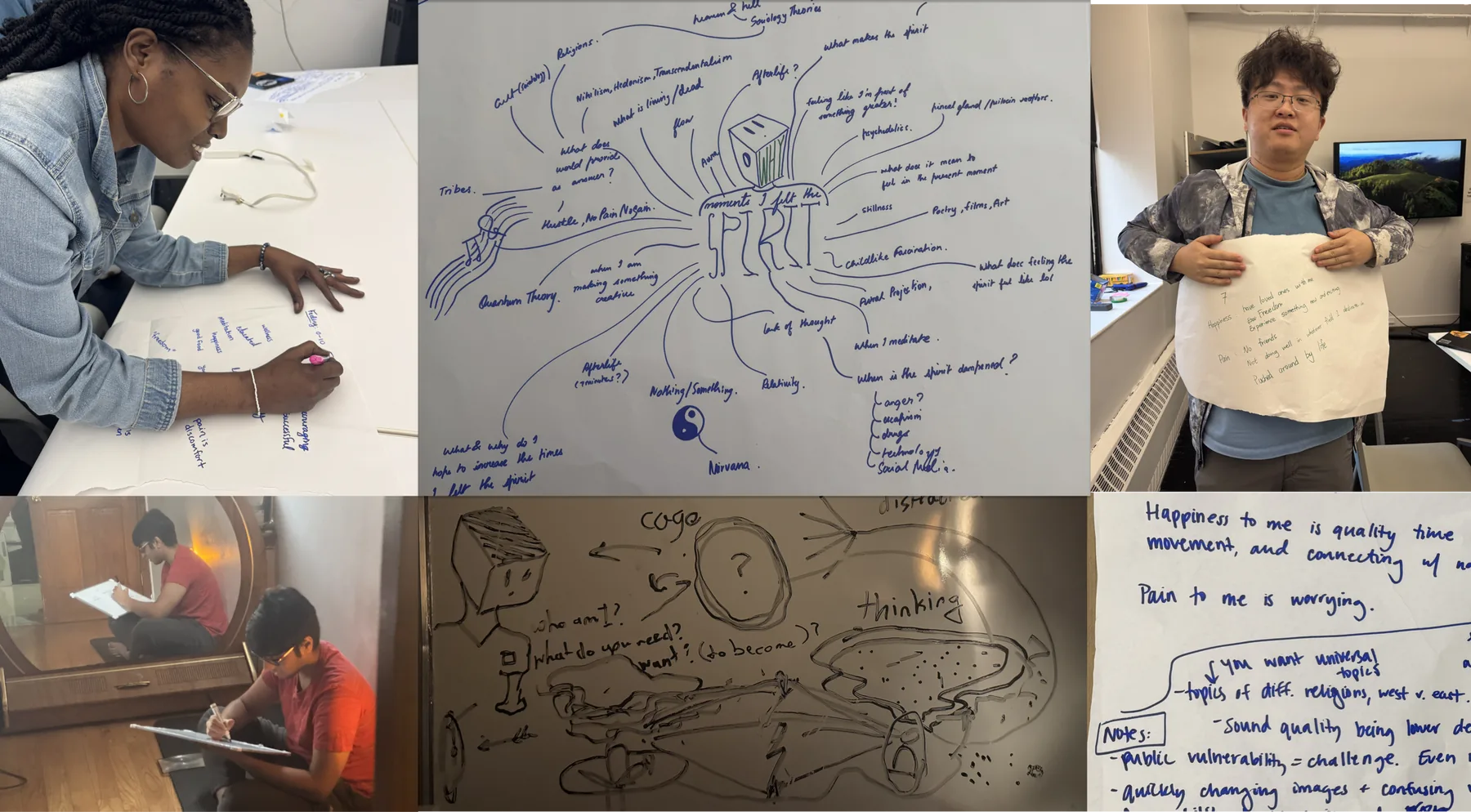
Mandalas style explorations
The goal was for people to not use the cursor. The coin is a distraction.
When you shake your hand, the mandala ripples.
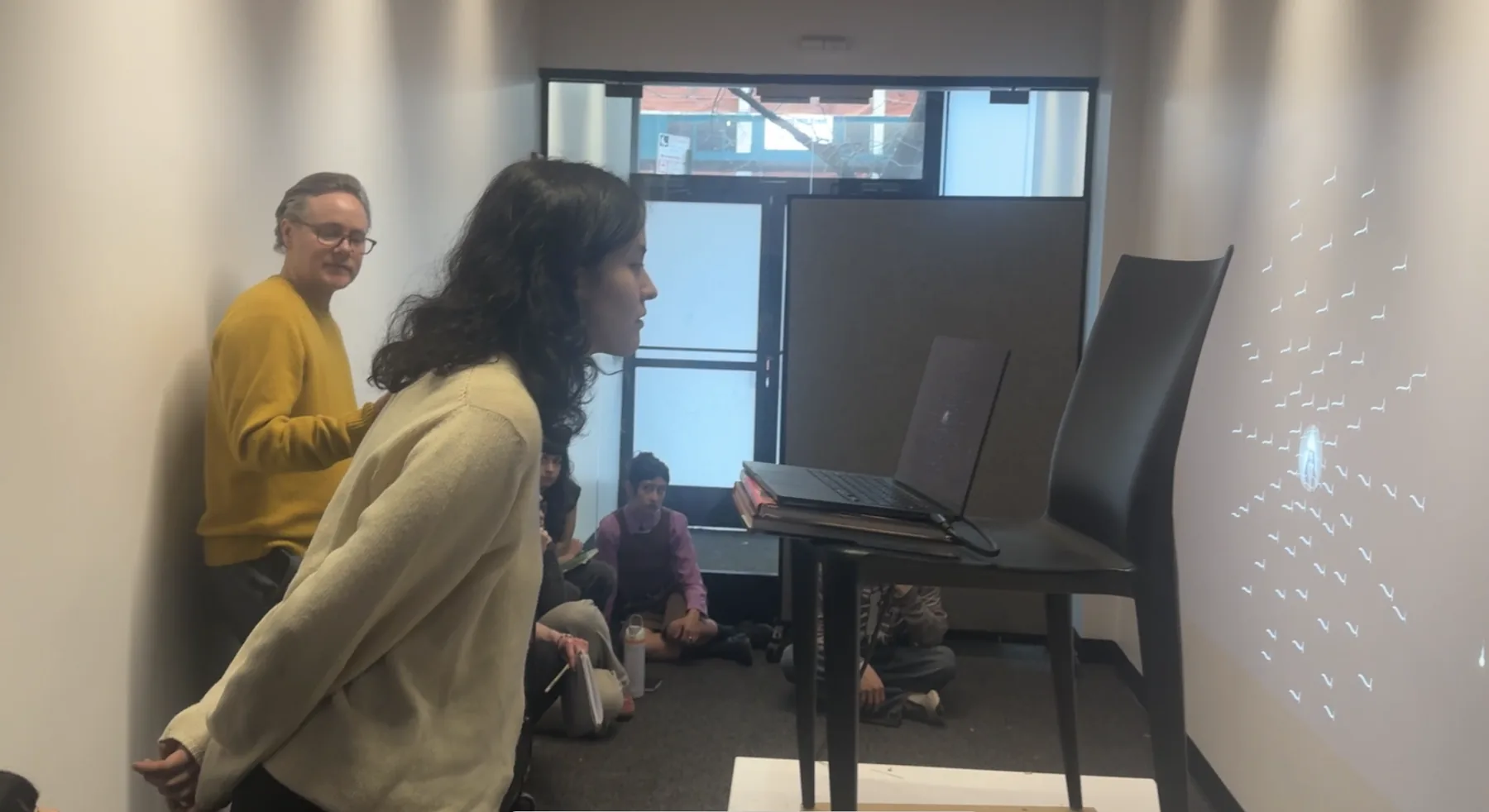
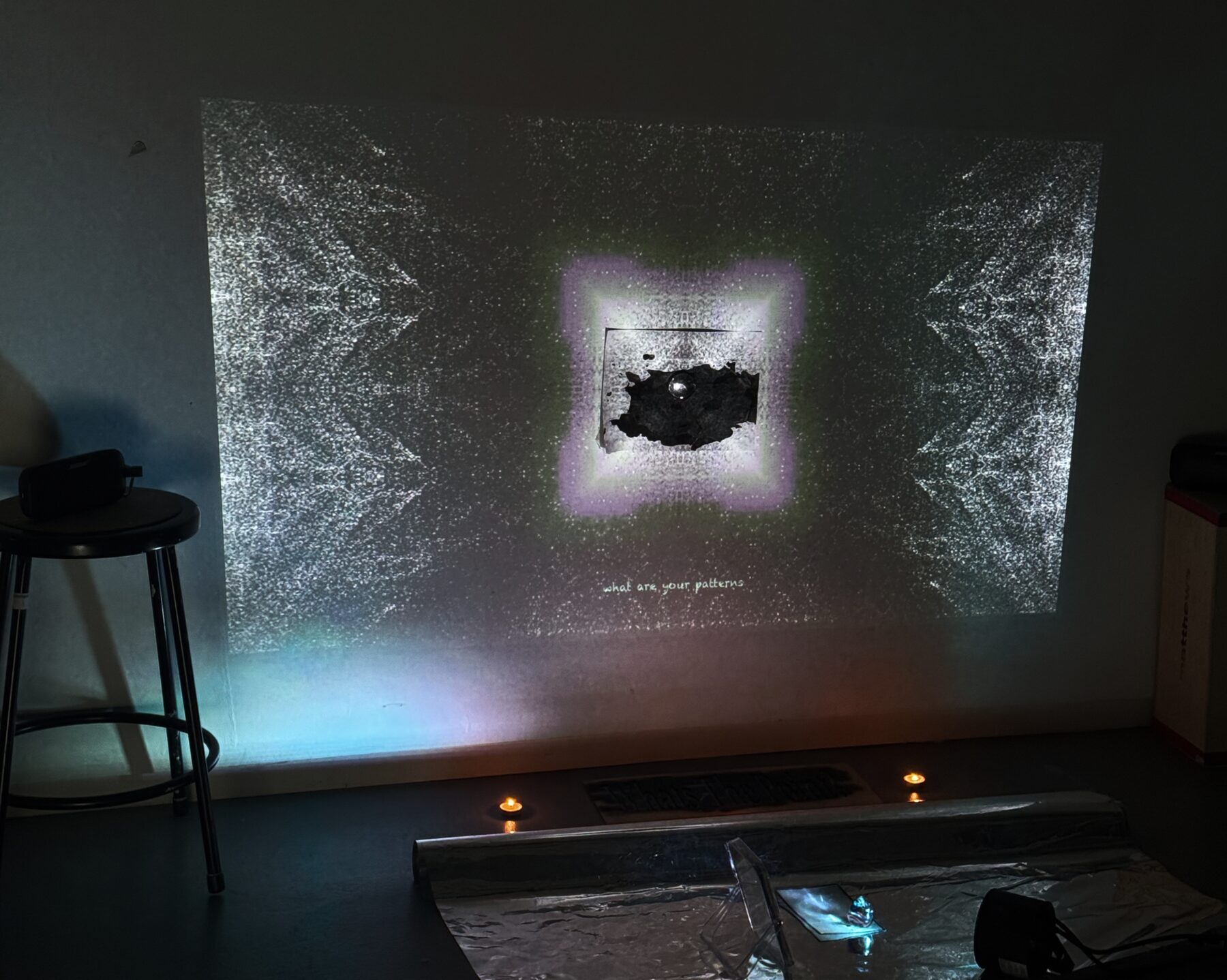
Going beyond mandalas and playing with different eye tracking forms.


A report of what you stayed with, and what that might say about you.
Some people closed their eyes and let go of the visuals entirely. That told me more about immersion than anything I had designed for. The generative system was doing its job, but the room was doing more.
Building the mandala engine in TouchDesigner was slower than expected. Each parameter change cascaded into three others, and the system had its own logic that took time to understand. By the end I was adjusting less and listening more.
The installation worked best when the space held still. Darker rooms, fewer people, quieter conditions. What surprised me was how much the lighting and acoustic setup shaped the experience before anyone even looked at the screen. Design kept expanding to include things I had not thought of as design.